
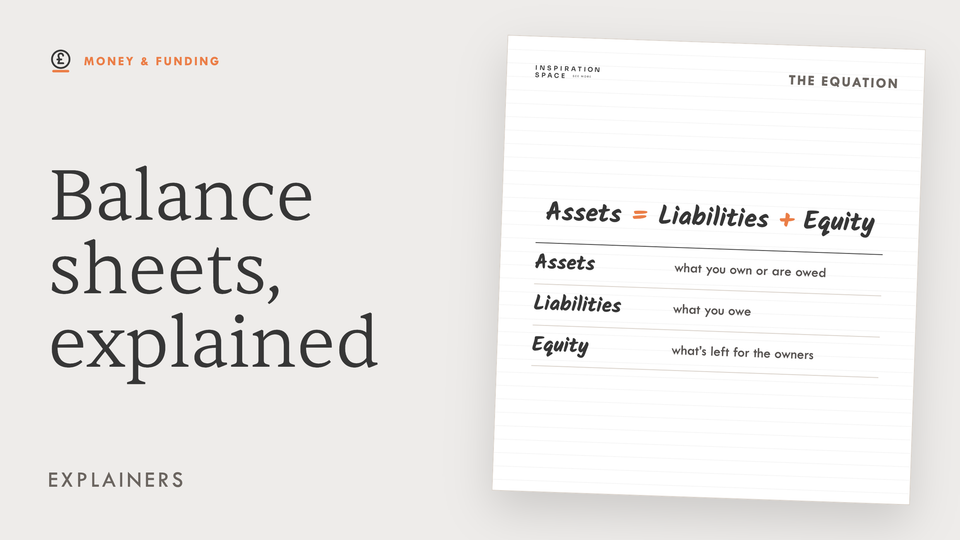
A balance sheet is a snapshot of what a business owns, what it owes and what is left for its owners at one date.
A balance sheet shows the financial position of a business on a particular day. It lists assets, liabilities and the owners’ interest, then brings them into balance.
Profit can look reassuring. Your bank balance may disagree. The balance sheet helps explain why.
The Inspiration Space view: The numbers should help you ask better questions, not deliver a verdict from a distance. Timing and the story behind each figure still matter.
Why it matters
It can show whether the business has enough short-term resources to meet upcoming bills, how much it relies on borrowing and whether value is building over time.
It is a snapshot, not a film. Read several dates together and the direction becomes more useful than any single number.
The main parts
Assets
Things the business owns or is owed. Current assets—cash, stock and customer invoices due—are expected to turn into cash or be used within roughly a year. Fixed assets, such as equipment, support the business for longer.
Liabilities
Amounts the business owes. Current liabilities, including tax, suppliers and short-term borrowing, are generally due within a year. Longer-term liabilities fall due later.
Capital and reserves
What belongs to the owners after liabilities are deducted from assets. It can include money invested, retained profit and other reserves. It is not necessarily cash sitting in the bank.
The totals worth understanding
Net current assets or liabilities
Current assets minus current liabilities. A positive figure suggests short-term assets exceed short-term bills; a negative one flags pressure, although timing and the quality of those assets matter.
Total assets less current liabilities
The resources left after short-term obligations are deducted, before longer-term liabilities are taken off.
Net assets or liabilities
Total assets minus all liabilities. Positive net assets mean assets exceed debts on that date. Net liabilities mean the reverse. Neither figure tells the whole story on its own.
Why is it called a balance sheet?
Because the two sides follow the accounting equation: assets equal liabilities plus equity. If a business borrows £10,000, cash rises by £10,000 and borrowing rises by £10,000. The sheet still balances; it has not suddenly become £10,000 richer.
What this looks like in practice
A studio has £30,000 in unpaid customer invoices and £8,000 in the bank. It also owes £22,000 in tax, suppliers and other bills due soon.
Its current assets are £38,000 and its current liabilities £22,000, giving net current assets of £16,000. That sounds comfortable—until you notice most of the assets are invoices, not cash. If customers pay late, the studio may struggle to meet bills despite the positive figure.
That is why the notes behind the numbers matter.
Profit is not the same as cash in the bank
Treating the balance sheet as a scorecard or confusing profit with cash. It records a position based on accounting rules and estimates; it does not tell you whether every invoice will be paid on time or every asset is worth its recorded value.
Compare this year with the previous year, then ask your accountant what changed, which short-term bills are coming and how quickly the current assets can genuinely become cash.
Related Resource
Balance Sheets 101 Guide