It's no longer enough to replace the plastic packaging, add a leaf to the label and ask marketing to make it sound “greener”.
The people checking environmental claims would quite like to see the working.
Since April 2025, the Competition and Markets Authority has been able to investigate breaches of consumer law, issue directions and impose fines directly - without taking a business to court first.
The rules are not designed to stop businesses talking about genuine improvements.
They are designed to stop a small positive change being stretched into a much bigger claim than the evidence can support.
Why it matters
Marketing teams are often handed the claim after the interesting decisions have already been made.
Somebody changes a material, supplier or process. The brief arrives saying the product is now “better for the planet”.
Everyone gets excited. A lovely campaign follows.
Then...somebody asks:
- Better in what way 🤔?
- Compared with what 🤔?
- Across the whole product or one part of it 🤔?
- What evidence do you have 🤔?
And...this is where the receipts come in.
The Advertising Standards Authority says the basis of an environmental claim must be clear.
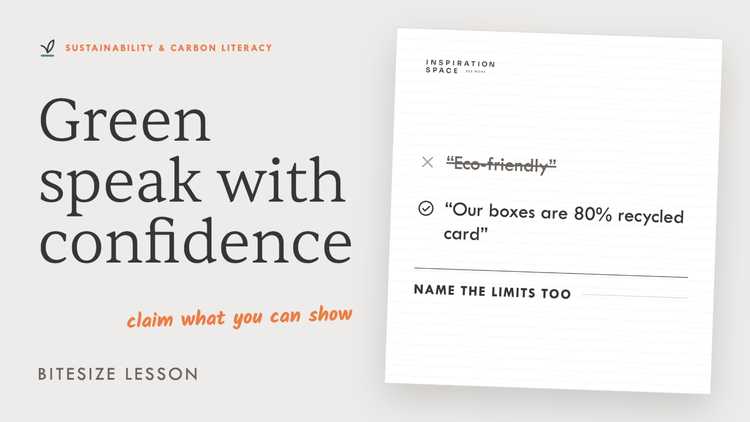
In other words, “made with 40% less plastic packaging than our previous version” is a claim someone can understand and investigate.
“Planet-friendly” is doing a lot more heavy lifting.
Who needs to pay attention
This is not only a problem for enormous brands with legal departments and a nervous agency on retainer.
It matters if you:
- write website or packaging copy;
- manage advertising or social media;
- create campaigns for clients;
- brief freelancers or agencies;
- repeat environmental information supplied by a manufacturer; or
- approve claims on behalf of your business.
Passing on somebody else’s wording does not make the claim magically become your neighbour’s problem.
What to do next
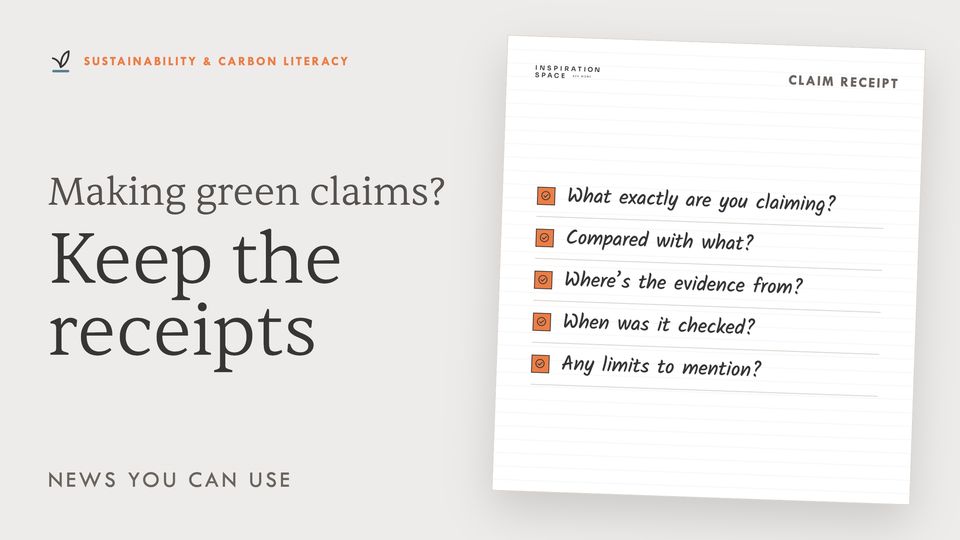
Before publishing an environmental claim, open a folder and put the evidence inside it.
Record:
- exactly what you are claiming;
- which product, service or activity it covers;
- what you are comparing it with;
- where the evidence came from;
- when that evidence was checked; and
- any limitation the customer needs to understand.
If the evidence cannot survive being placed next to the sentence, change the sentence.
The aim is not to say nothing. It is to say something specific enough to be useful—and true enough to stand behind when somebody asks to see the receipts.
Sources